For years, businesses in the UAE have relied on PDFs, emailed invoices, and manual accounting processes.
That’s about to change.
The UAE is introducing mandatory e-Invoicing as part of its digital transformation agenda, and while the pilot phase begins in July 2026, the phased mandatory rollout starts in 2027.
Many business owners hear “e-Invoicing” and assume it’s just another software update.
It isn’t.
It changes how invoices are created, exchanged, validated, and reported. More importantly, it affects your accounting processes, ERP systems, VAT compliance, and day-to-day financial operations.
If you’re waiting until the deadline approaches, you’re already behind.
What Is Changing?
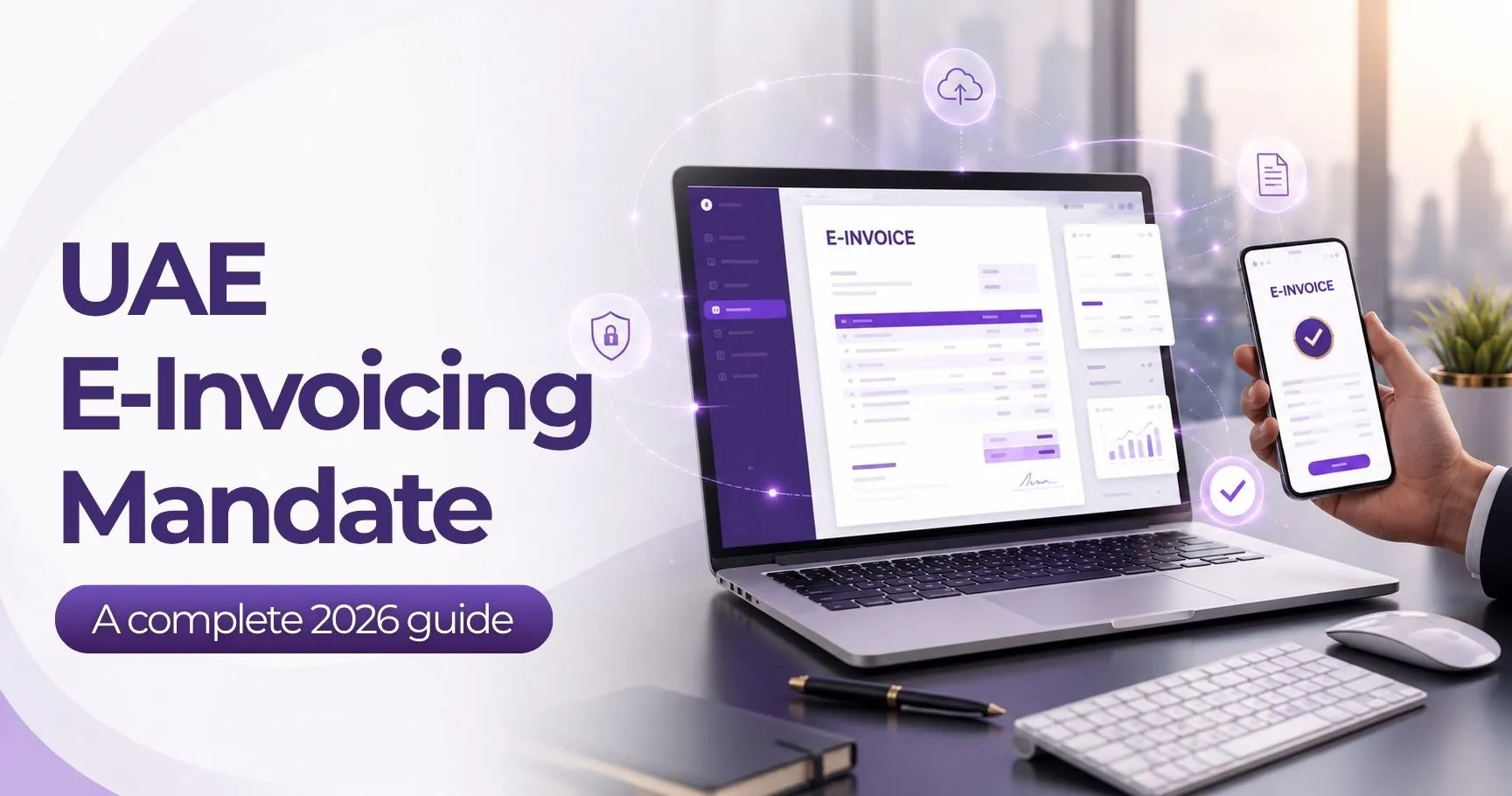
Under the UAE’s new Electronic Invoicing System (EIS), businesses within the scope will no longer be able to rely on PDF invoices alone.
Instead, invoices must be:
- Created in a structured XML format
- Exchanged through an Accredited Service Provider (ASP)
- Aligned with the Ministry of Finance’s technical standards
- Generated using systems that support the new framework
This isn’t simply about replacing one file format with another.
It’s about creating a standardized, secure, and automated invoicing ecosystem that improves tax compliance while reducing manual work.
Why Is the UAE Introducing e-Invoicing?
Like many countries around the world, the UAE is investing in digital tax administration.
The objectives are clear:
- Improve VAT compliance
- Reduce invoicing errors
- Increase transparency
- Minimize fraud
- Create faster and more efficient business transactions
For businesses, there’s an added benefit.
Less manual processing means fewer mistakes, quicker invoice approvals, and better visibility across finance operations.
The Timeline You Should Know
The Ministry of Finance has chosen a phased rollout instead of introducing the system overnight.
Here’s what that means.
| Timeline | What Happens |
| July 2026 | Pilot phase begins |
| Late 2026 | System testing and business onboarding |
| 2027 onwards | Phased mandatory implementation |
That phased approach gives businesses valuable preparation time.
Use it wisely.
Who Should Pay Attention?
If your business operates in the UAE, this should already be on your compliance roadmap.
The framework primarily covers:
- Business-to-Business (B2B)
- Business-to-Government (B2G)
- Government-to-Business (G2B)
Although implementation will happen in phases, businesses shouldn’t assume they have years to prepare.
ERP upgrades, accounting system changes, and process reviews rarely happen overnight.
Why Preparation Matters
Here’s a scenario we see often.
A company decides to wait until e-Invoicing becomes mandatory.
Months later, they discover their ERP system isn’t compatible with the required XML format. Their finance team hasn’t been trained, invoice workflows need redesigning, and an Accredited Service Provider still needs to be selected.
Suddenly, a compliance project that could have been planned over several months becomes an urgent business problem.
Starting early avoids that pressure.
Five Practical Steps You Can Take Today
Even if your implementation phase hasn’t started yet, there are several things you can do now.
1. Review your accounting software
Confirm whether your ERP or accounting platform supports structured electronic invoices.
2. Understand your invoice workflow
Map every approval, review, and manual step in your current process.
You’ll quickly identify areas that need improvement.
3. Choose the right Accredited Service Provider
An ASP plays a central role in validating and securely exchanging electronic invoices.
Selecting one shouldn’t be a last-minute decision.
4. Train your finance team
Technology only works when people know how to use it.
Preparing your employees early makes implementation significantly smoother.
5. Review your wider tax compliance
e-Invoicing doesn’t exist in isolation.
It’s closely connected to VAT, accounting records, and corporate tax compliance, so it’s worth reviewing all of these together.
Don’t Focus Only on Penalties
Yes, the Ministry of Finance has introduced administrative penalties for non-compliance.
But the bigger risk is operational.
Late implementation can lead to:
- Delayed customer payments
- Invoice processing issues
- ERP disruptions
- Increased manual work
- Higher implementation costs
Businesses that prepare early generally spend less time fixing problems later.
How Govvin Accounting Helps
At Govvin Accounting, we’ve seen one common misconception.
Many businesses think e-Invoicing is simply an IT project.
It’s not.
Successful implementation requires accounting expertise, compliance knowledge, process improvements, and coordination between finance teams, ERP providers, and Accredited Service Providers.
We help businesses:
- Assess e-Invoicing readiness
- Review accounting and finance workflows
- Strengthen VAT and corporate tax compliance
- Coordinate implementation with technology partners
- Prepare for a smooth transition before mandatory rollout
The businesses that benefit most from e-Invoicing won’t be the ones who rush to comply at the last minute.
They’ll be the ones who prepare early, improve their financial processes, and treat this as an opportunity to modernize how they operate.
Final Thought
The shift to UAE e-Invoicing isn’t just another regulatory update. It’s part of a broader move toward a more digital, connected, and transparent business environment.
The question isn’t whether your business should prepare.
It’s when.
And if the answer isn’t “now,” it may become much more expensive later.
What stage is your business at?
Have you started reviewing your accounting systems and e-Invoicing readiness, or are you waiting for your implementation phase? Share your thoughts in the comments.


 5 min read mins read
 0 Comments